
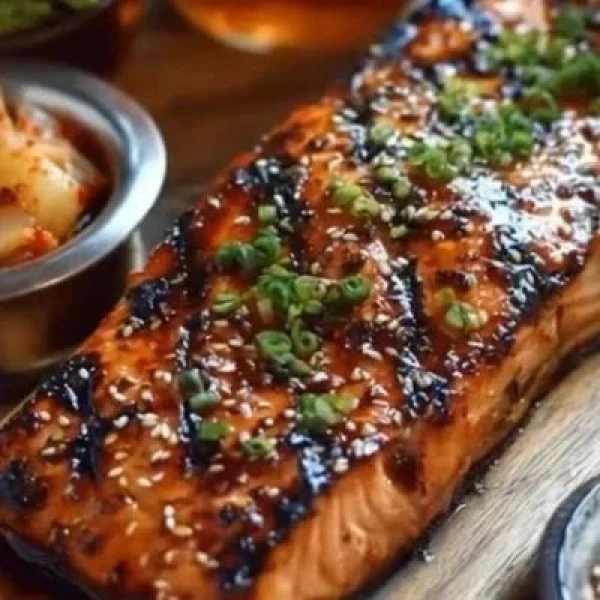
There's something magical about watching salmon transform on the grill, and this Korean Glazed Grilled Salmon takes that experience to a whole new level. The glaze caramelizes beautifully over the open flame, creating glossy, lacquered edges that crackle slightly when you bite into them. Meanwhile, the salmon stays incredibly moist and tender inside, infused with the sweet-savory flavors of soy sauce, fresh ginger, and aromatic sesame oil. This recipe proves that restaurant-quality fish doesn't require complicated techniques or hours of preparation. With just a handful of pantry-friendly ingredients and about 25 minutes from start to finish, you'll have a showstopping dinner that looks like it came from your favorite Korean BBQ spot.
Why I Love This Recipe
This Korean Glazed Grilled Salmon has become my go-to recipe when I want to impress without stress. The glaze does all the heavy lifting, transforming simple salmon fillets into something extraordinary with minimal effort. What I love most is the contrast of textures—those beautifully charred, sticky-sweet edges give way to buttery, flaky salmon that practically melts on your tongue. The flavor profile hits all the right notes: umami from the soy sauce, warmth from fresh ginger, subtle sweetness from honey or brown sugar, and that nutty depth from toasted sesame oil. It's sophisticated enough for dinner parties yet easy enough for busy weeknights. Plus, salmon is packed with omega-3 fatty acids and high-quality protein, making this as nutritious as it is delicious. The recipe is incredibly forgiving too—even if you're new to grilling fish, the glaze helps prevent sticking and keeps everything moist. And let's talk about that presentation: the glossy mahogany glaze, vibrant green scallions, and scattered sesame seeds make this dish absolutely Instagram-worthy every single time.
What You Need From Your Kitchen
Grill or Grill Pan
Essential for achieving those gorgeous char marks and caramelized glaze that define this dish, plus the high heat helps render the salmon's fat beautifully
Basting Brush
Critical for applying multiple layers of glaze during cooking, ensuring every bite is coated in that sweet-savory goodness
Instant-Read Thermometer
Takes the guesswork out of doneness, ensuring your salmon reaches the perfect 145°F without overcooking and drying out
Small Saucepan
Needed to simmer and reduce the glaze ingredients into that thick, glossy coating that clings to the salmon
Fish Spatula
The thin, angled design makes flipping delicate salmon fillets effortless without breaking them apart on the grill grates
Perfect Pairings
Coconut Jasmine Rice
The subtle sweetness and fluffy texture provide the perfect neutral base to soak up any extra glaze, while complementing the salmon's rich flavors without competing
Cucumber Kimchi Salad
The cool, crisp cucumbers with a tangy, slightly spicy kick cut through the richness of the salmon and refresh your palate between bites
Stir-Fried Bok Choy with Garlic
Quick-cooked greens add a fresh, slightly bitter element that balances the sweet glaze while keeping the meal light and nutritious
Miso Soup
A warm, comforting starter that primes your taste buds with umami flavors that echo the salmon's savory notes
Korean Glass Noodles (Japchae)
These slightly sweet, chewy noodles studded with vegetables create a satisfying textural contrast and turn this into a complete Korean feast
Pro Tips
- For the best flavor, let the salmon sit at room temperature for fifteen minutes before grilling, which ensures more even cooking from edge to center and prevents a cold center.
- Toast your sesame seeds in a dry skillet over medium heat for two to three minutes until fragrant and golden, shaking the pan frequently to prevent burning and bring out their nutty oils.
- When testing for doneness, insert your thermometer into the thickest part of the fillet at an angle, and remember that salmon will continue cooking slightly after removed from heat due to carryover cooking.
🍳 Your Cooking Progress
Ingredients Gathered
0/11 CompleteCooking Steps
0/7 CompleteRecipe Mastery
0% CompleteKorean Glazed Grilled Salmon
This restaurant-quality salmon showcases perfectly caramelized edges and tender, flaky flesh coated in a sweet-savory glaze. The combination of umami-rich soy, aromatic ginger, and nutty sesame creates an irresistible flavor profile that transforms simple salmon into an extraordinary meal.
Ingredients
💡 Click on ingredients to check them off!
- 4 salmon fillets, 6 ounces each, skin-on
- 1/3 cup low-sodium soy sauce
- 3 tablespoons honey
- 2 tablespoons rice vinegar
- 1 tablespoon toasted sesame oil
- 2 cloves garlic, minced
- 1 tablespoon fresh ginger, grated
- 1 teaspoon sriracha or gochugaru
- 2 tablespoons sesame seeds, toasted
- 3 scallions, thinly sliced
- 1 tablespoon cornstarch mixed with 2 tablespoons water
Instructions
💡 Click on steps to mark as complete!
-
1Prepare the GlazeIn a small saucepan over medium heat, whisk together soy sauce, honey, rice vinegar, sesame oil, minced garlic, grated ginger, and sriracha. Bring the mixture to a gentle simmer, stirring occasionally to prevent the garlic from burning. Once bubbling, stir in the cornstarch slurry and cook for two to three minutes until the glaze thickens enough to coat the back of a spoon with a glossy sheen.
-
2Preheat and Prep the GrillHeat your grill to medium-high, around 400 to 450 degrees Fahrenheit, ensuring the grates are clean and well-oiled to prevent sticking. Pat the salmon fillets completely dry with paper towels, as moisture is the enemy of good caramelization. Lightly brush the flesh side of each fillet with a thin coating of neutral oil and season with a pinch of salt and black pepper.
-
3Start Grilling Skin-Side DownPlace the salmon fillets skin-side down on the preheated grill grates at a slight diagonal to create attractive crosshatch marks. Close the lid and let them cook undisturbed for five to six minutes, allowing the skin to crisp up and release naturally from the grates. Resist the temptation to move them too early, as this ensures beautiful grill marks and prevents tearing.
-
4Apply First Glaze LayerUsing your basting brush, generously coat the top surface of each salmon fillet with the prepared Korean glaze, making sure to get into all the nooks and crannies. The heat will cause the sugars in the glaze to start caramelizing immediately, creating that signature lacquered appearance. Let this layer set for about two minutes before adding more.
-
5Flip and Continue GlazingCarefully slide a fish spatula under each fillet and flip them over so the flesh side is now against the grates. Immediately brush another generous layer of glaze over the now-exposed crispy skin. Cook for an additional three to four minutes, brushing with more glaze every minute or so, until the salmon reaches an internal temperature of 145 degrees Fahrenheit and flakes easily with a fork.
-
6Caramelize and FinishDuring the final minute of cooking, apply one last generous coating of glaze and watch as it bubbles and caramelizes into a glossy, slightly charred coating. The edges should look dark and sticky while the center remains moist and tender. Remove the salmon from the grill and let it rest for two minutes to allow the juices to redistribute throughout the flesh.
-
7Garnish and ServeTransfer the grilled salmon fillets to a serving platter or individual plates, making sure to showcase that gorgeous caramelized glaze. Immediately sprinkle with toasted sesame seeds for nutty crunch and scatter the thinly sliced scallions over the top for a fresh, bright finish. Drizzle any remaining glaze around the plate for extra flavor and visual appeal, then serve while still warm.
Nutrition Facts (Per Serving)
Chef's Notes
- Skin-on salmon fillets work best for grilling as the skin acts as a protective barrier and helps hold the delicate fish together during flipping and cooking.
- If using frozen salmon, thaw completely in the refrigerator overnight and pat very dry before grilling to ensure proper browning and prevent steaming instead of searing.
- The glaze can be made up to three days ahead and stored in an airtight container in the refrigerator, just reheat gently before using and add a splash of water if it has thickened too much.
- For indoor cooking, you can use a grill pan over high heat or even broil the salmon in your oven, keeping it about four inches from the heating element.
- Fresh ginger makes a noticeable difference in this recipe compared to dried, providing a bright, zesty flavor that complements the sweet-savory glaze perfectly.
- Watch the glaze carefully during the final minutes of cooking as the sugars can burn quickly, adjust your heat or move salmon to a cooler part of the grill if needed.